
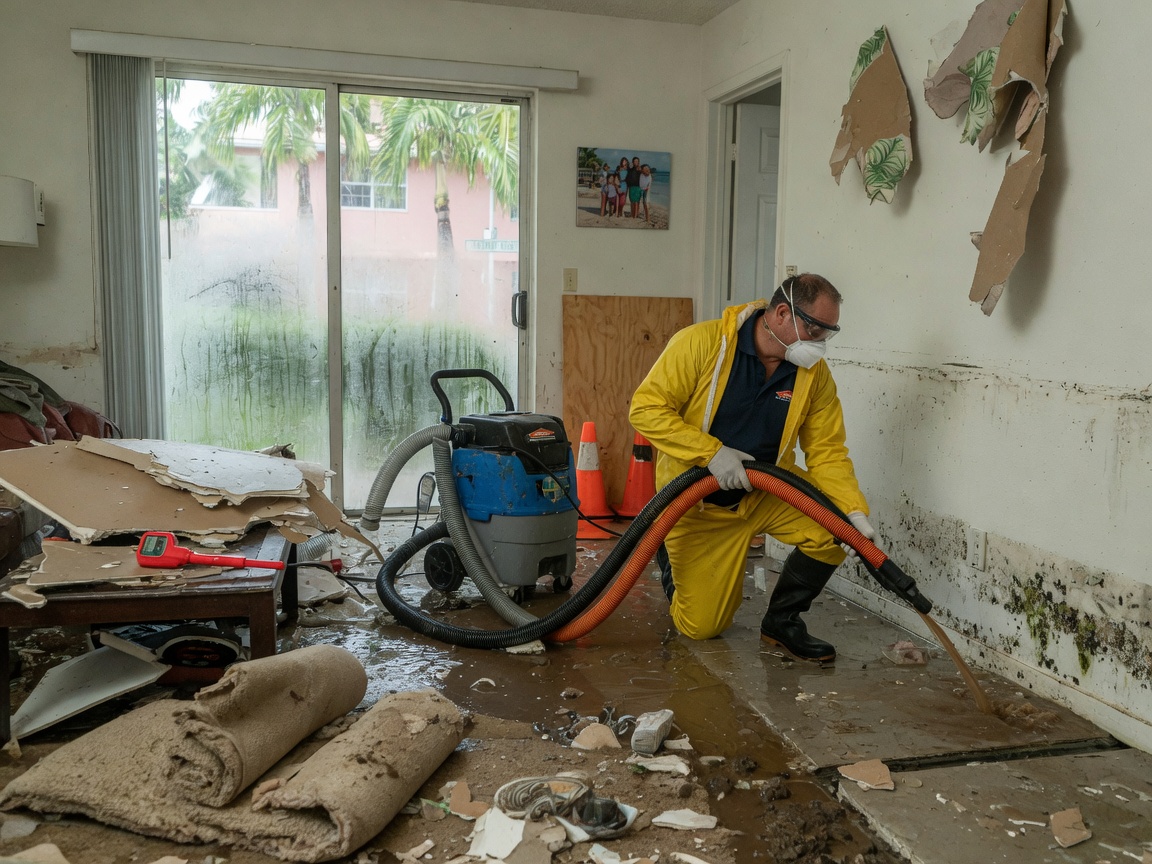
Miami-Dade County sees frequent flooding from the tropical monsoon climate, with sudden downpours overwhelming drainage in low-lying spots like Overtown and parts of Little Havana. Older concrete and masonry homes common in these neighborhoods absorb water into slabs and walls, requiring moisture mapping and targeted demolition rather than simple surface drying. Properties near Freedom Tower or the Design District often involve mixed commercial-residential builds where water travels between floors through shared plumbing chases.
In high-rise condos along Brickell and near Bayside Marketplace, flood events from storm surge or heavy rain create different problems: water enters through parking garages and elevator pits, then migrates upward via electrical conduits. Extraction must account for limited access and building management rules. Coconut Grove and Coral Gables homes with older clay tile roofs and crawl spaces trap moisture under flooring, raising mold risk quickly in the persistent humidity that follows summer storms.
Restoration crews working after monsoon events prioritize negative air machines and dehumidification sized for Miami’s dew points, which stay elevated even after visible water is gone. Failure to address hidden saturation in baseboards or behind drywall in Wynwood lofts leads to recurring odors and failed insurance claims. Local work also requires coordination with Miami-Dade permitting when structural elements are removed in flood-prone zones near the Miami River.
Technician insight
In Miami the thing that catches most people out with flood damage restoration is how long concrete slabs in older Little Havana and Overtown homes stay saturated after monsoon rains; the humidity keeps readings high for weeks if you don’t pull the baseboards and run targeted drying right away.
Wynwood Loft After Monsoon Flooding
Heavy overnight rain sent water through a loading dock door into a ground-floor loft. Crews found saturation under the polished concrete and behind drywall on two walls. Extraction and continuous dehumidification dried the slab and cavities without removing the original floors. Final readings met pre-loss levels before the tenant moved back in.
Flood Damage Restoration Services We Offer
✓Emergency Flood Water Extraction
Rapid removal of standing water from homes and commercial spaces in Brickell and Downtown Miami using truck-mounted pumps suited for tight urban access.
✓Storm Surge Drying and Dehumidification
Industrial drying protocols sized for Miami’s high humidity levels after coastal flooding events affecting Coral Gables and Coconut Grove properties.
✓Slab and Subfloor Moisture Removal
Targeted extraction and drying beneath concrete slabs common in Little Havana and Overtown to prevent hidden mold growth after monsoon rains.
✓High-Rise Garage and Elevator Pit Flood Cleanup
Specialized equipment and access planning for water that enters multi-story buildings near Vizcaya Museum and the Design District.
✓Historic Structure Water Mitigation
Careful drying methods for older masonry homes in Little Havana and Coral Gables that avoid damaging original plaster and tile finishes.
Flood Damage Restoration Cost in Miami, FL
| Service | Typical Range | What Affects It |
|---|---|---|
| Initial Assessment And Moisture Mapping | Free | Includes written scope for insurance |
| Residential Flood Extraction | $800–$2,200 | Varies by square footage and water depth |
| High-Rise Garage Or Elevator Pit Drying | $1,500–$4,000 | Access restrictions and equipment needs increase cost |
| Slab Moisture Removal And Monitoring | $600–$1,800 | Duration of drying cycle in humid conditions |
Ranges are typical for Miami, FL and confirmed with an exact written quote before any work starts.
How it works
- 1
On-Site Assessment
Technicians inspect affected areas in the specific neighborhood, document moisture levels, and note construction type before any work begins.
- 2
Water Removal
Standing water is extracted using pumps and vacuums appropriate for the property’s access and water volume.
- 3
Structural Drying
Air movers and dehumidifiers are placed to pull moisture from walls, slabs, and cavities while monitoring daily readings.
- 4
Final Verification
Moisture meters confirm levels match pre-loss conditions before any reconstruction or contents return.
Pricing
Costs depend on water volume, number of affected levels, and whether hidden moisture requires demolition.