
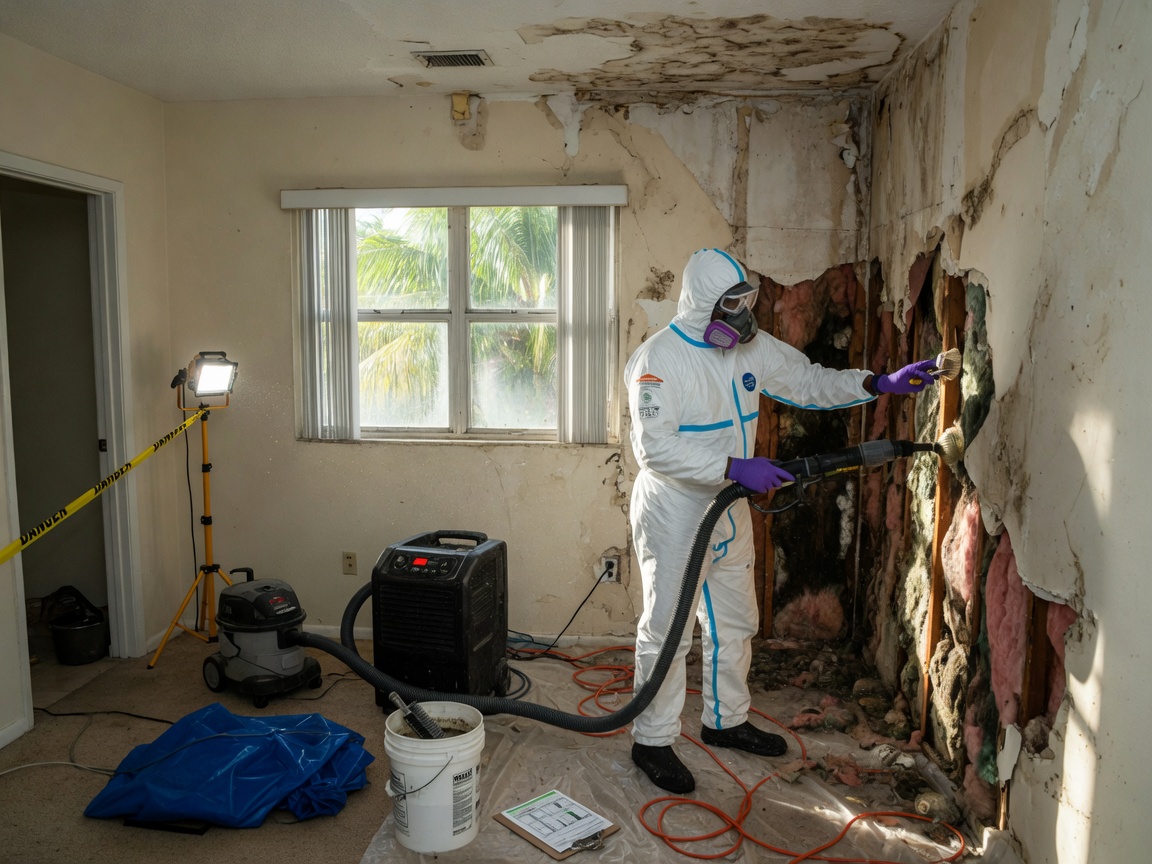
Miami’s tropical monsoon climate brings prolonged high humidity and sudden heavy rains that push moisture into stucco walls, flat roofs, and older concrete structures common in Little Havana, Overtown, and Downtown Miami. Once water sits behind drywall or under tile, mold colonies form quickly in the 80-plus percent humidity that lasts through summer. Technicians must pull baseboards, cut affected drywall at least 18 inches past visible growth, and run commercial dehumidifiers for days rather than hours because the air itself keeps feeding spores.
In Brickell and Design District high-rises, HVAC systems often spread spores through shared ductwork, so remediation includes negative-air machines and HEPA filtration on every floor affected. Coral Gables and Coconut Grove homes from the 1950s and 60s frequently have original plaster and terrazzo that trap moisture under the surface, requiring moisture-meter mapping before any material is removed. Failure to address hidden pockets behind kitchen cabinets or in bathroom vanities leads to rapid regrowth once the job is finished.
Post-flood work in Hialeah and Miami Beach neighborhoods demands extra steps because storm water carries sewage and silt that feed mold on subfloors and inside wall cavities. Crews separate salvageable hardwood from saturated particleboard, bag all porous debris on-site, and treat remaining framing with EPA-registered antimicrobials before drying begins. Local building codes require permits for structural cuts in certain historic districts, so crews coordinate with Miami-Dade inspectors to keep the timeline moving.
Technician insight
In Miami the thing that catches most people out with Mold Remediation is how fast spores return when you skip the dehumidification phase after a summer rain. Older stucco homes in Coral Gables and Little Havana hold moisture behind the finish for weeks, and if you only treat the visible spot the colony just moves to the next wall cavity.
Hidden growth behind kitchen cabinets after roof leak
A Wynwood homeowner noticed a musty smell weeks after a brief but heavy rain. Inspection found elevated moisture behind the kitchen drywall and under the sink base. Crews removed the affected cabinets and drywall, treated the framing, and ran dehumidifiers for four days until readings dropped below 12 percent. Clearance testing passed and the owner was able to reinstall cabinetry without further issues.
Mold Remediation Services We Offer
✓Post-Flood Mold Removal
Removes mold colonies that form after storm or plumbing floods in Miami-Dade County homes, including extraction of contaminated drywall and subfloor materials.
✓HVAC Mold Remediation
Cleans and treats mold inside air handlers and ductwork common in Brickell and Wynwood high-rises where shared systems spread spores between units.
✓Attic Mold Treatment
Targets mold growth in poorly ventilated attics of older Coral Gables and Little Havana homes where roof leaks combine with summer humidity.
✓Drywall and Insulation Removal
Cuts and disposes of mold-affected drywall and insulation behind baseboards and cabinets in single-family homes across Overtown and Design District.
✓Crawl Space Mold Remediation
Addresses moisture and mold under elevated homes in Coconut Grove and Hialeah where standing water from heavy rains creates persistent damp conditions.
Mold Remediation Cost in Miami, FL
| Service | Typical Range | What Affects It |
|---|---|---|
| Initial inspection and moisture mapping | $250–$450 | Larger multi-unit buildings or multiple floors increase time on site. |
| Residential mold remediation | $1,200–$4,500 | Depends on square feet removed and whether HVAC cleaning is added. |
| Crawl space or attic treatment | $800–$2,800 | Access difficulty and extent of insulation replacement move the price. |
| Post-remediation air clearance testing | $300–$600 | Required by many Miami-Dade landlords and insurance carriers. |
Ranges are typical for Miami, FL and confirmed with an exact written quote before any work starts.
How it works
- 1
Inspection and Moisture Mapping
Technicians use moisture meters and thermal cameras to locate hidden water in walls and ceilings throughout the affected Miami property.
- 2
Containment Setup
Plastic barriers and negative air machines isolate the work zone to prevent spores from spreading to unaffected rooms or neighboring units.
- 3
Removal of Affected Materials
Moldy drywall, insulation, and baseboards are cut out, bagged, and removed while HEPA vacuums capture airborne particles.
- 4
Antimicrobial Application and Drying
Remaining surfaces receive EPA-registered treatments, followed by industrial dehumidifiers and air movers running until moisture levels reach safe targets.
- 5
Final Clearance Testing
Air and surface samples are collected and sent for analysis to confirm mold levels have returned to normal background counts before reconstruction.
Pricing
Pricing varies by square footage affected, depth of hidden growth, and whether HVAC or structural cuts are required.